
How to Know When to Sell

Buying a stock is fun, a positive event. It is the beginning of a hopeful relationship. Selling is a negative experience, the end of the relationship. Selling is not fun, but it must be done.
Without a plan, you typically make your selling decisions based on emotional factors.

Key Point #1:
Give your stock “room to breathe.”
Your stop should give the stock enough room to do its normal trading action.
Think of it like lanes on the highway.
What about your trades?

Key Point #2:
Know your exits in advance.
Just like when you get on a plane.
Before the plane moves, you learn:
Treat your trades the same way.
Know your exits before you enter the trade.
Have an exit plan in place if:
The first thing you do is decide what your stop will be at the beginning of the trade. We call this your initial “Line In The Sand” (LITS).
This is the point where enough is enough, and if the stock’s price crosses this line, you exit the trade no questions asked.
Your Stop Price
Where do you set your stop?
Why This Matters To You
The cardinal rule of investing is to let your profits run and keep your losses small. The dynamic nature of the VectorVest Stop Price allows you to stay with solid stocks longer and get out of weak stocks sooner.
When you are deciding to sell a stock, you want to:
Tim used to buy what he felt were good stocks and hold them for as long as he could. However, he never knew when to sell them and he watched them go down, suffering large losses. He waited for them to come back, but they never did. He said he felt like he was trading in the dark.
After learning the Successful Investor techniques, he said:
“Since I started with VectorVest, and took the Successful Investor course six months ago, I am on target to do 30% this year on new positions. I also noticed that many of the positions I exited due to what I learned, have continued down after I sold them and are only now just starting to turn around. So, I missed the worst 6 months of the year for
those stocks.
Now, I have the ability to review my positions and make informed decisions to make changes; changes that will improve my overall performance. Emotionally, I feel like I have a better ability to know what is happening in the overall market and can sleep better.”

The VectorVest STOP Price in Action
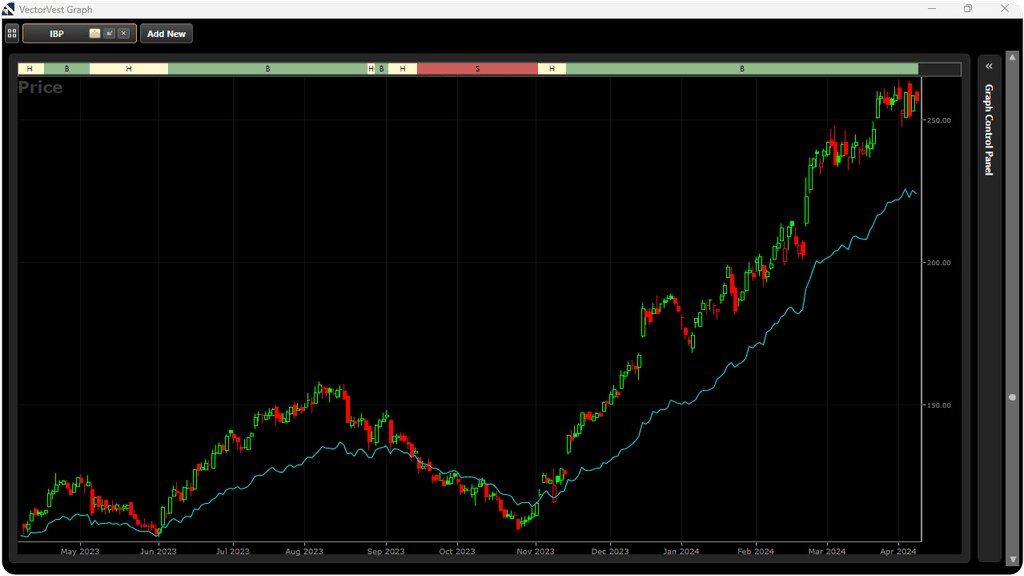
A stock’s price behavior and future performance can become vividly clear by observing the difference between a stock’s price and its Stop-Price.
•
If a stock’s price is above its Stop-Price, and the price difference is getting wider on a day-to-day or week-to-week basis, the stock is behaving favorably and will likely continue to perform well.
•
If the reverse is true, the stock is heading for trouble. This is when you need to be on guard.
VectorVest alerts its users to these conditions by adjusting its Buy, Sell, Hold ratings in the following manner:
•
A stock gets a BUY “B” or a HOLD “H” rating if its price is above its Stop-Price.
•
A stock gets a SELL “S” rating if its price is below its Stop-Price.
•
The distinction between a “B” and “H” rating is made on the basis of safety, fundamentals and price trend. Strong stocks receive “B” ratings much more readily than weak stocks.
The days of selling stocks emotionally are over. With our Stop Price, you now have your exit strategy planned out in advance.
Here’s what it looks like:
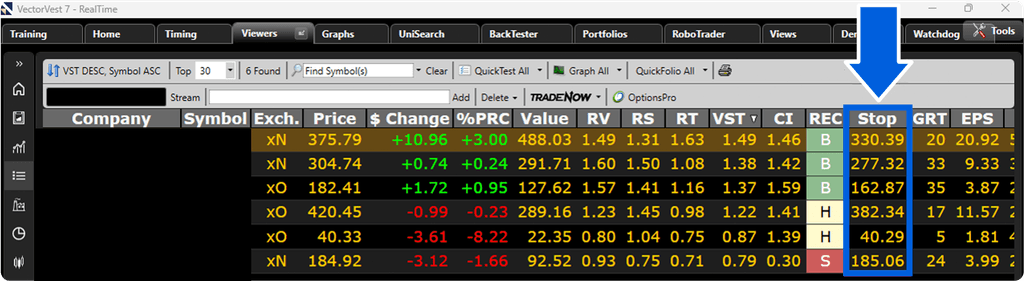
You can use our Stop Prices as a guide or as gospel, but whatever you do, don’t ignore them.